
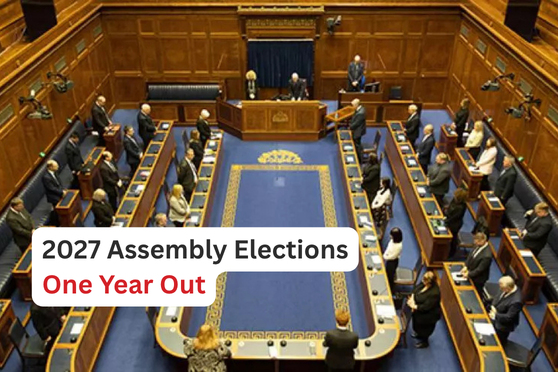
With Assembly and Local Elections due on the same day, 2027 could shape the next phase of devolution, councils and regional priorities
Northern Ireland is now one year out from an election cycle that could have important implications for businesses across Derry, the North West and the wider region.
Polling day is scheduled for 7th May 2027, with voters expected to elect both the Northern Ireland Assembly and representatives across the 11 local councils on the same day. The elections will use the Single Transferable Vote system, with the Assembly expected to dissolve on 19th March, ahead of a campaign period of around 30 days.
For Chamber members, the key issue is not simply party competition, but what the result could mean for stability, policy delivery and investment confidence. Current polling averages put Sinn Féin on 25%, ahead of the DUP on 18%. The contest for third place remains highly competitive, with Alliance, the UUP and TUV each on 12%, and the SDLP on 11%.
Departmental control after the election will also matter for business. Once parties take responsibility for different Executive departments, they will help shape priorities on the economy, education, skills, infrastructure, planning and public services. For the North West, this could influence issues such as investment, transport connectivity, workforce development, regeneration and support for key sectors. Members should therefore watch not only the overall result, but also which parties take which departments and what programmes they bring into government.
Turnout will be a major factor. Assembly turnout was 63% in 2022 and 65% in 2017, both elections held during periods of political crisis. That compares with 55% in 2016 and 56% in 2011. If turnout rises again in 2027, the key question will be which voters are mobilised and which stay at home.
There will also be a local dimension. This will be the first time since 2011 that local and Assembly elections have been held together. Local election turnout is typically around 10 percentage points lower than Assembly turnout, and voting patterns can differ between the two contests.
Boundary changes could also influence outcomes in areas including Foyle, East Londonderry, North Antrim, Upper Bann and South Belfast & Mid Down. For the North West, that means representation and political influence could shift.
The Takeaway:
Businesses should watch the 2027 elections as a test of devolved stability, departmental priorities, council leadership and the political conditions for long-term regional decision-making.
Londonderry Chamber
CONNECTING
BUSINESS
NORTHWEST