
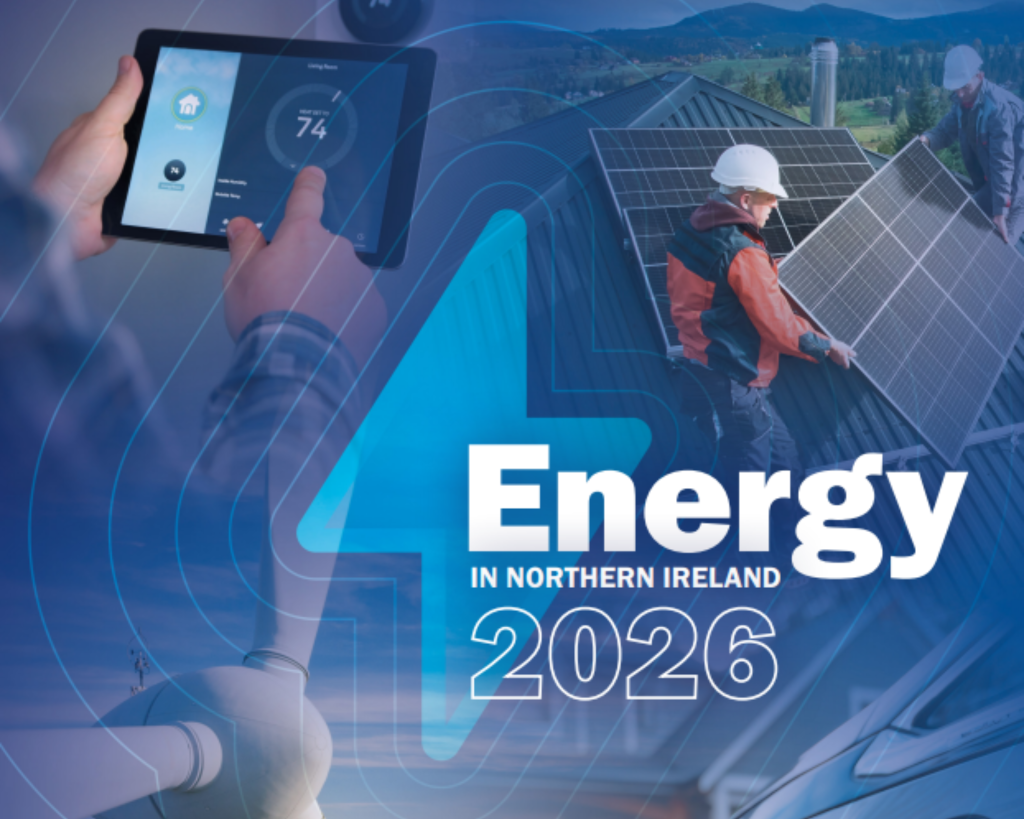
The Department for the Economy has published its latest ‘Energy in Northern Ireland 2026’ report, providing the most comprehensive picture of the region’s energy system, economy, consumption patterns and progress towards net zero.
For businesses across the North West, the report offers valuable insight into one of the most significant issues affecting competitiveness, investment and economic growth over the coming decade.
Energy is increasingly central to business costs, infrastructure capacity, inward investment, workforce development and the delivery of major economic projects. The report highlights both the progress Northern Ireland has made and the scale of the challenge ahead.
Among the key findings, Northern Ireland’s low-carbon and renewable energy economy generated approximately £1.5 billion in turnover and supported 7,100 full-time equivalent jobs in 2024, representing significant growth compared to 2019. The number of energy sector enterprises has also increased substantially over the past decade, reflecting growing activity and investment in the sector.
The publication also tracks progress towards the Northern Ireland Energy Strategy, which includes targets to:
- Deliver 25% energy savings from buildings and industry by 2030
- Generate at least 80% of electricity consumption from renewable sources by 2030
- Grow the low-carbon and renewable energy economy to more than £2 billion turnover by 2030
For the North West, these issues are particularly relevant. Access to reliable and affordable energy infrastructure is increasingly becoming a prerequisite for business expansion, housing development, advanced manufacturing, digital investment and emerging sectors such as artificial intelligence and data centres.
The report also provides detailed analysis of electricity generation, renewable energy performance, energy consumption patterns and energy costs for both domestic and non-domestic users. These trends will influence business operating costs, investment decisions and regional competitiveness in the years ahead.
As policymakers continue to debate energy infrastructure, grid capacity, renewable deployment and net-zero delivery, it is important that the business community remains informed and engaged. Energy policy decisions taken today will have long-term consequences for economic growth, investment attraction and the ability of regions such as the North West to realise their full potential.
We would encourage Chamber members with an interest in infrastructure, manufacturing, construction, sustainability, transport, technology or economic development to review the report and consider its implications for their organisation and the wider regional economy.
The full Energy in Northern Ireland 2026 report is available here.
Energy transformation at the heart of economic renewal, save the date for our North West Future of Energy Conference returning18th November at the White Horse Hotel.
Londonderry Chamber
CONNECTING
BUSINESS
NORTHWEST